

A source of possibility, power, and participation.
Narrative matters—more than ever—for climate healing.

Narrative has been at the heart of my climate journey for 25+ years. I’ve been swayed by it. Studied it. Found salve in it. Shaped it and reshaped it and shaped it again. I’m a sucker for stories we tell about ourselves, the planet, and the threads between us. If you’re reading this, you probably are too.
But in a time when we need to sow solar panels on rooftops and farms around the world . . . wrest capital from pillaging industries and send it into real solutions . . . decarbonize the trickiest aspects of modern life (cement, steel, and the like) . . . retire some 1 billion fossil-fuel-burning machines in the U.S. alone . . . deal with that small matter of surging authoritarianism . . . In a time like this, why narrative?
That’s the question I took up recently in the opening keynote at the inaugural Narrative Change Summit—a daylong exploration of the nexus of creative media and climate action. (Kudos to English Cook, Alex Turnbull, and the whole Climate Film Festival team.) The theater was filled with people who are doing good, worthy things at this nexus—especially the making and sharing of climate-focused stories.
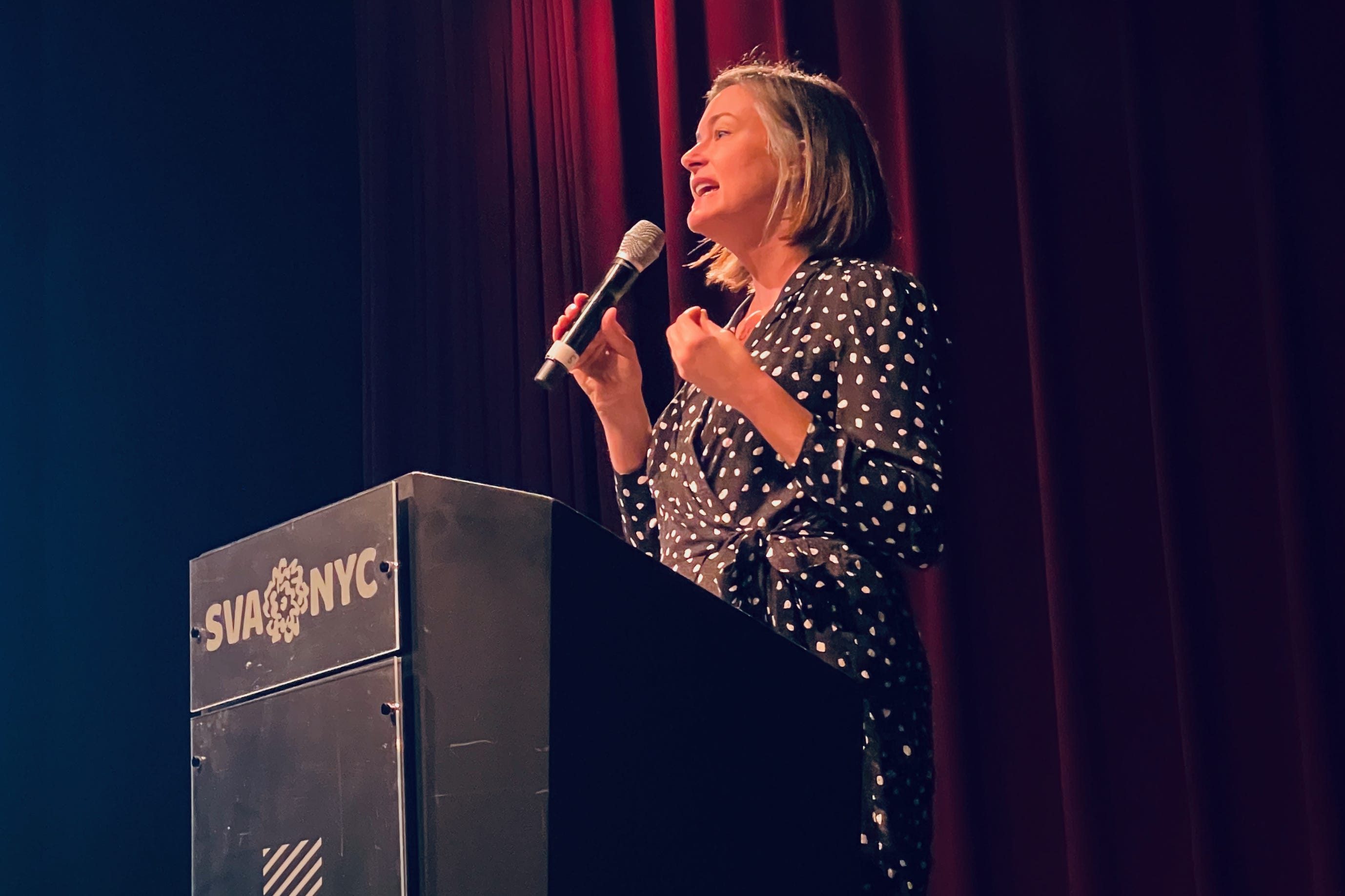
It felt like a moment to offer some appreciation to ourselves and each other for staying in the work and doubling down at a time when it’s more urgent, more necessary, and, in some ways, harder than ever. (Dear one, you can take that moment of self-appreciation too. Hand to heart might feel nice, and enjoy a generous breath.)
It also felt like a moment to come up out of the weeds and remind ourselves why this work matters.
Put simply: Without narrative, we might as well fold our cards. We might as well concede a liveable future. Because narrative is essential human infrastructure of transformation and climate healing. We don’t get the solar power, solutions investment, viable democracy, or much anything else without it. Certainly not in a way that holds.
In my own work, I think about three essential and interconnected roles of narrative: possibility, power, and participation.
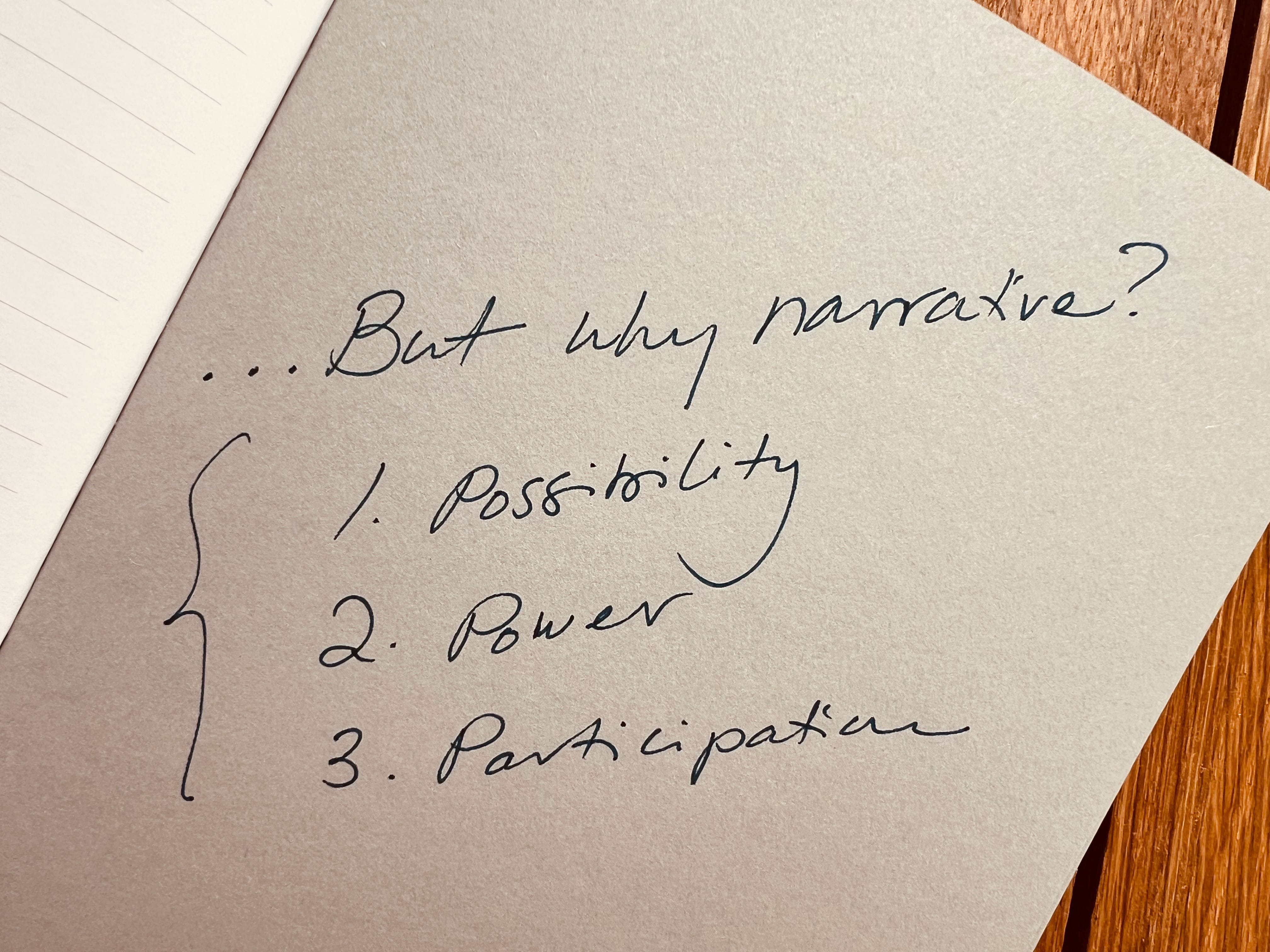
First, possibility. Narrative sets the terms of right/wrong, necessary/not, possible/impossible. Certainly, it’s an essential tool for pointing out all that is broken and bad. But, more importantly, this is the realm of imagination and vision—the maybe of our mind’s eye. Narrative helps us grasp the future we want and glimpse pathways to get there. It shines a light on truth, courage, and solutions. It illuminates what could yet be and stirs a passion to reach toward possibility.
Second, power. Narrative may feel diffuse and even slippery, but it holds enormous influence. The fossil fuel industry has certainly been hip to that for 50+ years. As the late systems theorist and professor Donella “Dana” Meadows taught us, this is all about paradigms. In a complex system, there are a dozen leverage points—points of power. The most powerful are paradigms, mindsets, shared societal ideas, for they produce the system itself. We can tinker with rules, policies, and incentives. We can roll out new technologies. But if we don’t have the paradigm shift, all of that can be fleeting—as we’re seeing. Paradigms are the stuff of story. We transform and transcend them through narrative.
Third, participation. Narrative opens the way to engagement. It can offer an invitation to step in. Recall where your own climate journey began . . . What was the spark? Maybe a book, film, speech, conversation, experience—something that shifted the story you’d been holding? I think back to watching the documentary Baraka, reading Daniel Quinn’s Ishmael and Mary Oliver’s poetry, journaling after a first encounter with a clear cut. They all created a seedbed. Many people care about climate change, but a tiny fraction translate concern into participation. We need to be able to see ourselves in the collective story—and how our engagement might help write it.
It is no minor act to hold the pen of possibility, the power of paradigms, and the pathways to participation. We should hold them with humility, with reverence, and with determination too. Because to have a chance of realizing the beauty and brightness of a renewed world, we must recast narratives and culture in the here and now.
The telling of that future—one we might be proud of—has everything to do with making it so.

P.S. The wondrous Kate Marvel, NASA scientist and author of Human Nature: Nine Ways to Feel About Our Changing Planet, recently came on the podcast I co-host. It’s a beautiful episode. You can find it here or subscribe to A Matter of Degrees anywhere you listen to podcasts.
